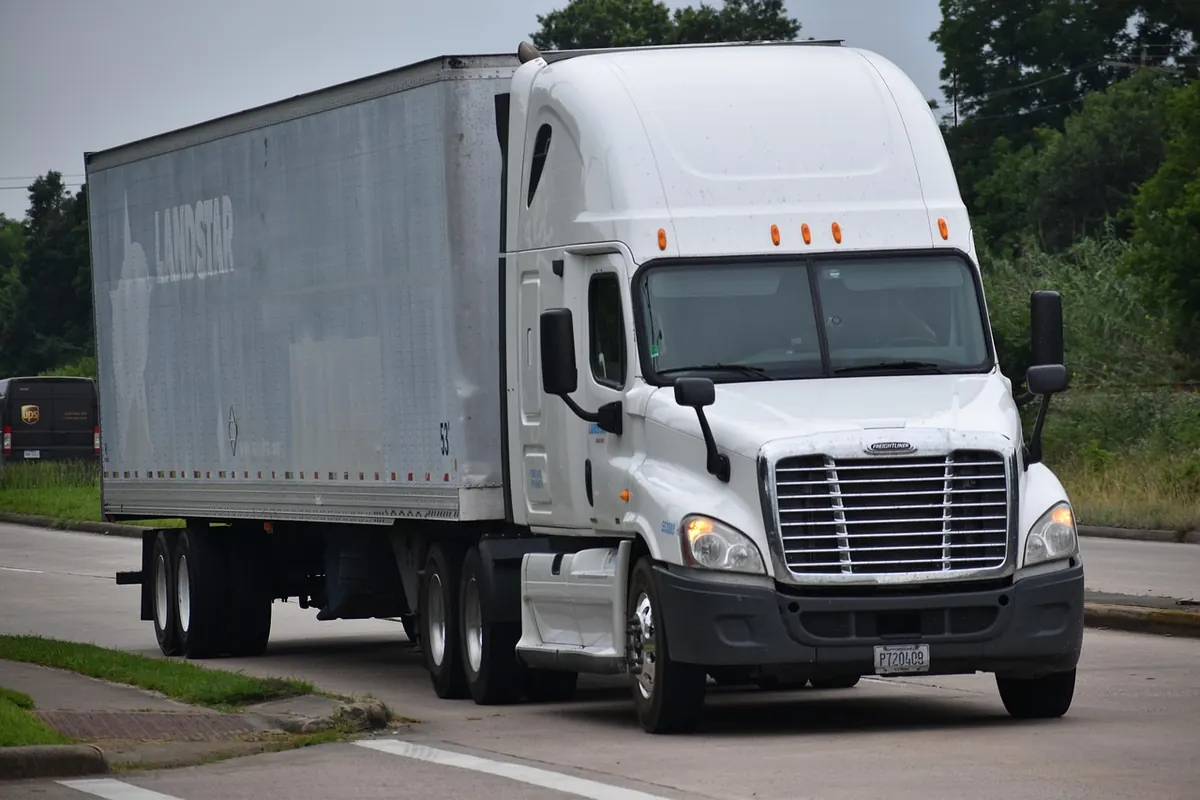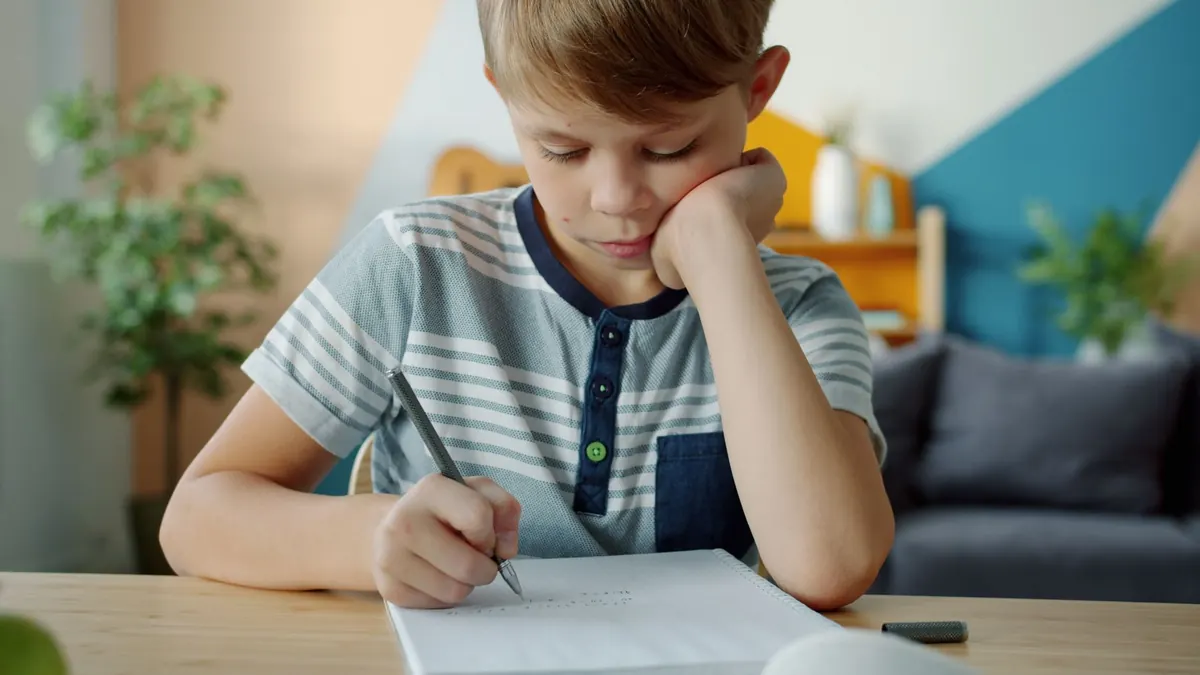
The first time you try to run a spelling test from the passenger seat, the CB crackles, the Jake brake rattles the cab, and your kid spells because as becuz. You mark it wrong, wait for the next fuel stop, and start over. He gets it that time.
Roadschooling works about like that: you take the lesson where you can get it. Some trucking families homeschool full time from the cab. Many more do it in stretches — a summer of long-haul runs, a slow freight season, a few weeks between schools. The logistics change, but the questions don't: who teaches, what gets taught, and who keeps the records that prove it happened.
Three Ways Trucking Families Roadschool
There's no single model. Most people settle into one of these:
- Full time in the cab. One parent drives, the kid rides, and school happens in short blocks between stops. This works best with one school-age child and materials that don't need Wi-Fi.
- Home base, driver gone. The truck stays on the road; the schoolwork stays home with a spouse, grandparent, or older sibling acting as learning coach. The driver handles read-alouds by phone and weekend projects.
- Seasonal or part time. Kids stay enrolled most of the year and roadschool during summer or long trips. You're supplementing rather than replacing, so planning is lighter and a bumpy day costs less.
Be honest about which one fits your household before you spend money on curriculum. A plan that requires the driver to teach long division while crossing the Rockies is not a plan. A plan that requires reliable Wi-Fi at every stop is also not a plan.
Curriculum That Survives the Road
Offline beats online, paper beats plastic that depends on a signal, and short beats thorough. The materials that hold up in a truck are the ones that don't care whether you're parked or rolling, and that can be dropped mid-page without losing the thread.
- Workbooks and consumables. Math, handwriting, and grammar programs that use a single worktext per subject are nearly indestructible. No loose pages, no binder rings spilling under the bunk.
- Pre-downloaded audio and video. Audiobooks, history series, and science podcasts queued up before you pull out. Download at home or at the terminal, not at a truck stop at 11 p.m.
- A clipboard, a lap desk, and headphones. Unglamorous, but they turn a bunk into a desk and keep a read-aloud from competing with the engine.
- One binder per kid. Dividers by subject, a "done" pocket for dated work. This becomes your portfolio later, and you'll be glad you kept it.
- A paper atlas. Maps don't need charging, and they teach things screens don't.
The Road Is Already a Curriculum
A lot of the school day is sitting right there in the windshield. Fuel math: 118 gallons at $3.89 is what, and what does that do to your cost per mile? Scale weights, axle limits, and bridge laws are applied fractions and ratios. Time zones are clock arithmetic and a decent astronomy lesson. Weather fronts, elevation, and mountain grades cover earth science. The interstate numbering system — odd numbers run north-south, even numbers run east-west, mile markers reset at state lines — is a genuinely good geography unit, and your kid will remember it because they watched it scroll past.
Rate sheets and detention pay are economics. Estimated arrival times are algebra with consequences. When a lesson comes wrapped in something that actually matters to the household, it sticks better than any worksheet.
Legal Questions: Who Keeps the Records?
This is the part that trips up new roadschoolers, and it's the part you cannot wing. Homeschool rules are set state by state, and they range from "file a notice and go" to "submit a portfolio, keep attendance, and test annually." Some states let you enroll part time or use a district independent-study program; others have umbrella schools or church-school options that handle paperwork for you. Compulsory attendance ages differ too, so a kindergartner on the road is a different legal situation than a tenth grader.
Two practical moves: join a homeschool legal organization so you can read the actual requirements for your state of residence, and keep better records than you think you need. A dated sample of work per subject per month, a reading list, an attendance log, and any test results will satisfy almost anyone who asks. If the trucking company transfers you or you change your domicile, recheck the rules for the new state.
What a School Day Actually Looks Like
Forget the eight-hour block. Roadschoool days run in scraps of 20 to 45 minutes, stacked wherever they fit:
- Pre-trip, parked. Fifteen minutes of math while the driver does the walkaround.
- Rolling on open interstate. Read-aloud, audiobook, or spelling from the passenger seat.
- Waiting at the dock. This is your best block of the day — nobody is moving, nobody is watching you back in. Forty-five minutes of focused work.
- Fuel stop. Ten minutes of flashcards or mental math while the tanks fill.
- Evening shutdown. Writing, journaling, or a short video lesson before lights out.
Some days that adds up to four solid hours. Some days it adds up to forty minutes and a driver who's out of hours. Both are normal.
Keeping the Driving Parent Involved
If you're the one behind the wheel, you don't have to be the teacher, but you should still be in the conversation. Ask what they learned at the pull-in instead of whether they finished. Have them read you a paragraph over the headset. Do the science experiment in the parking lot on a Saturday: water bottle rockets, egg-drop in a coffee can, shadow tracking at a rest area. Quiz them on state capitals off the mile markers. Kids take school more seriously when both adults clearly care, even if only one of them is holding the pencil.
When the Week Falls Apart
It will. A breakdown in Nebraska, a blizzard closing I-80, a broker who won't answer, a 14-hour day that ends with everyone too tired to open a book. None of that means roadschooling failed. It means you had a week.
The trick isn't keeping every plate spinning. It's knowing which plate you can set down and pick back up on Monday.
Keep a running list of what got skipped so you can circle back to it. Trade an off week for a light week instead of a guilt week. And count the things that happened anyway: three states learned on the map, a load of math done at the fuel island, a kid who read a whole novel because there was nothing else to do between Amarillo and Flagstaff.
Start Smaller Than You Think
New roadschooling families tend to buy a full year of curriculum for four subjects and then discover that what actually fit the cab was a spelling book, a math worktext, and a library card. Start with one subject for two weeks. See what time you really have. Then add.
You don't need a classroom. You need a routine that bends when the freight changes, someone keeping honest records, and enough patience to run the same spelling test again at the next fuel stop — because that's how because finally gets spelled right.
Photo: Vitaly Gariev / Pexels